Denmark’s presidency of the Council of the EU
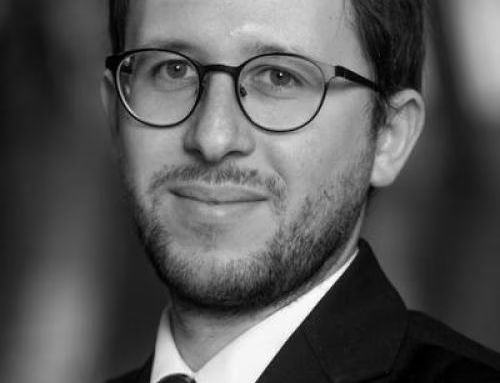
Interview with Pr. Sara Hagemann, University of Copenhaguen
Denmark’s presidency of the Council of the European Union is marked by far-reaching objectives, coined under the ambitious, yet vague, motto « A strong Europe in a changing world ». More specifically, the once rather sceptic EU member state is willing to uphold European defence and security efforts while combining economic competitiveness and the greening of the economy as well as keeping a proactive stance on enlargement issues. We ask Pr. Sara Hagemann, Professor of Political Science at the University of Copenhagen, how the small Nordic country has evolved on EU issues, where achievements are to be expected on various fronts and if the presidency is likely to have a lasting impact overall.
Q1. Denmark was once a rather sceptic and peripheral EU member state, which benefitted from a series of opt-outs. It has then moved to a much more central position in the EU over the last years. According to you, how can this dynamic be explained and what were the key stages observed?
Sara Hagemann (S.H.): Denmark has consistently held a pro-European, yet sceptic position in the EU since the very beginning of its membership, in 1973, when it joined together with the UK and Ireland. Over the years, this scepticism has been expressed both in public opinion (Eurobarometer surveys attest to this here), in national political debates, but also in the way the Danish government used to position itself in EU politics and policy-making: in comparison to other member states, Danish government representatives would more often record reservations or concerns with EU policy proposals, and would emphasise, in their negotiations, that the Danish parliament needs to give the government a mandate on each policy issue decided in Brussels. Hence, Danish ministers are more restrained in policy negociations than representatives from other countries, they argue[1].
The departure of the United Kingdom from the EU was a turning point for Denmark. Of course, the financial crisis in 2008, the migration crisis from 2014-2015 onwards, and the growing intensity of the Russian threat in the East had already bolstered the attention of successive Danish governments with respect to the objectives and benefits of EU membership. Yet, it was with the Brexit referendum and the subsequent exit process of the UK that the Danish public opinion substantially changed to a strong pro-EU position: today, the Danish population shows support for the EU at a whooping 88% of the population.
Brexit simply proved to the EU-sceptic Danes that the internal market and all other aspects of EU membership pays off, and quite significantly so for a small, open economy which is heavily dependent on its neighbours for both trade, geopolitics, and all aspects of cross-border relations. The subsequent events of the COVID crisis and the onset of the war in Ukraine have further added to the Danish support for the EU and to the government’s much stronger political stance for a more integrated and stronger European Union. As Denmark has provided significant military and political support to Ukraine since the outbreak of the way, which has also earned the government – and Prime Minister Mette Frederiksen in particular – a prominent voice amongst EU members.
Q2. Mette Frederiksen, Denmark’s Prime minister, has outlined a general approach for the country’s presidency, with no “signature project”. Yet the focus does seem to be placed on security and defence, where Denmark plays a more important role both within the EU and bilaterally, with Ukraine for example. What do you expect from the presidency on these fronts?
S.H.: The Danish government launched the EU presidency in July 2025 with the mission to ensure a safer EU and to strengthen competitiveness with an emphasis on the green transition. As we are now getting close to the end of the presidency, it is clear that Denmark has been successful in driving and facilitating several important issues within these topics, such as on defence and shared financing of defence capabilities, energy, and climate policy – although final agreements have not been as ambitious as many had hoped.
The reasons for the mixed results are that the reality for the Danish presidency is that 1) the world is a hard place at the moment, with Europe facing a situation of ‘poly-crises’ in which EU governments are not unanimous in their views on the most imminent threats and how to solve them; 2) there’s a limit to the role of the presidency and what can be mobilised by the government ‘in the Chair’, as compared to the issues that are dealt with under the European Council (presided over by Antonio Costa) or the prerogative of the European Commission (where Ursula von der Leyen is the president). Yet, it is clear that the coordination and collaboration between the Danish politicians, civil service and EU institutions has been very successful and closely aligned on the key issues – which leaves everyone better off.
Q3. Denmark is keen to sustain the EU enlargement process, coined as a “geopolitical necessity”, both with respect to the Balkans and to Ukraine. Yet this dynamic must also be “merit-based” and well linked to the readiness of both existing member states and their public opinions. The European Commission’s latest enlargement reports are not very supportive in this respect. How do you see the Danish added value?
S.H. Enlargement has been high on the agenda for the Danish EU presidency, and some would say that this topic was perhaps miscalculated by the Danish government in terms of both processes and realistic outcomes (a Danish podcast, ‘Formandsskabet’, discusses this in detail with key people involved, including Danish Europe Minister, Marie Bjerre). While Albania has sprinted ahead and is now in its last phase (or ‘cluster’) of negotiations, the Danish presidency has not been successful in getting agreement to open up the first cluster of negotiations with Ukraine and Moldova, as the Danes had initially insisted. The main obstacle for this process is the position of Hungary’s Victor Orban, and some additional reluctance from Slovakia’s Robert Fico, who currently states a ‘hesitation’, although not a threat of veto. These opposing positions can hardly be blamed on the Danish presidency, which has done much to highlight the urgency and security aspects of enlargement.
Q4. On the environment, the October European Council showed some willingness to uphold EU efforts in view of the COP 30 in Brazil, notably when it comes to the 2040 CO2 target. On the other hand, the difficult Environment Council held in early November showed European retreat on several points (watered down 2040 target, no strong 2035 target, ETS 2 postponement…). To what extent does this reflect Denmark’s position?
S.H.: The Danish government knew it would be difficult to land an ambitious agreement ahead of the COP-summit and also made it clear that the EU position was the best outcome possible given the great differences in governments’ positions. Still, there is little doubt that the outcome was disappointing to those supporting greater progress for climate mitigation policies in Europe, including Denmark.
Q5. Generally speaking, what do you think will come out of the Danish presidency of the Council? Is it likely to be a significant presidency both for Europe and for the government? Are results likely to be appreciated by the Danish public at all?
S.H. The conclusion from the Danish presidency must be, just a few weeks ahead of its completion, that the Danish government and civil service have done all they could and have showed great professionalism and insistence in their six months heading the Council of the European Union meetings. In fact, a minister from another government said at the October informal summit held in Copenhagen that ‘they show much insistence if not a lot of soul’. But diverging interests and opinions between member countries mean that the Danes could simply not land agreements on all of the topics they had hoped for. Still, it has been a significant experience for the Danish government and civil service to hold the presidency at such a crucial time in Europe’s history – whether the public pays attention and whether other EU member states will remember the Danish efforts during this presidency remains to be seen. But the Danes have asserted themselves as professional policy facilitators, and Prime Minister Mette Frederiksen as a competent policy leader, when topics and roles have allowed during a turbulent time for the EU.
[1] You can read more about these dynamics in this study by Hagemann et al (2019) and in a report published by UK in a Changing Europe.